A Comprehensive Shipping Dictionary Every E-Commerce Importer Must Know
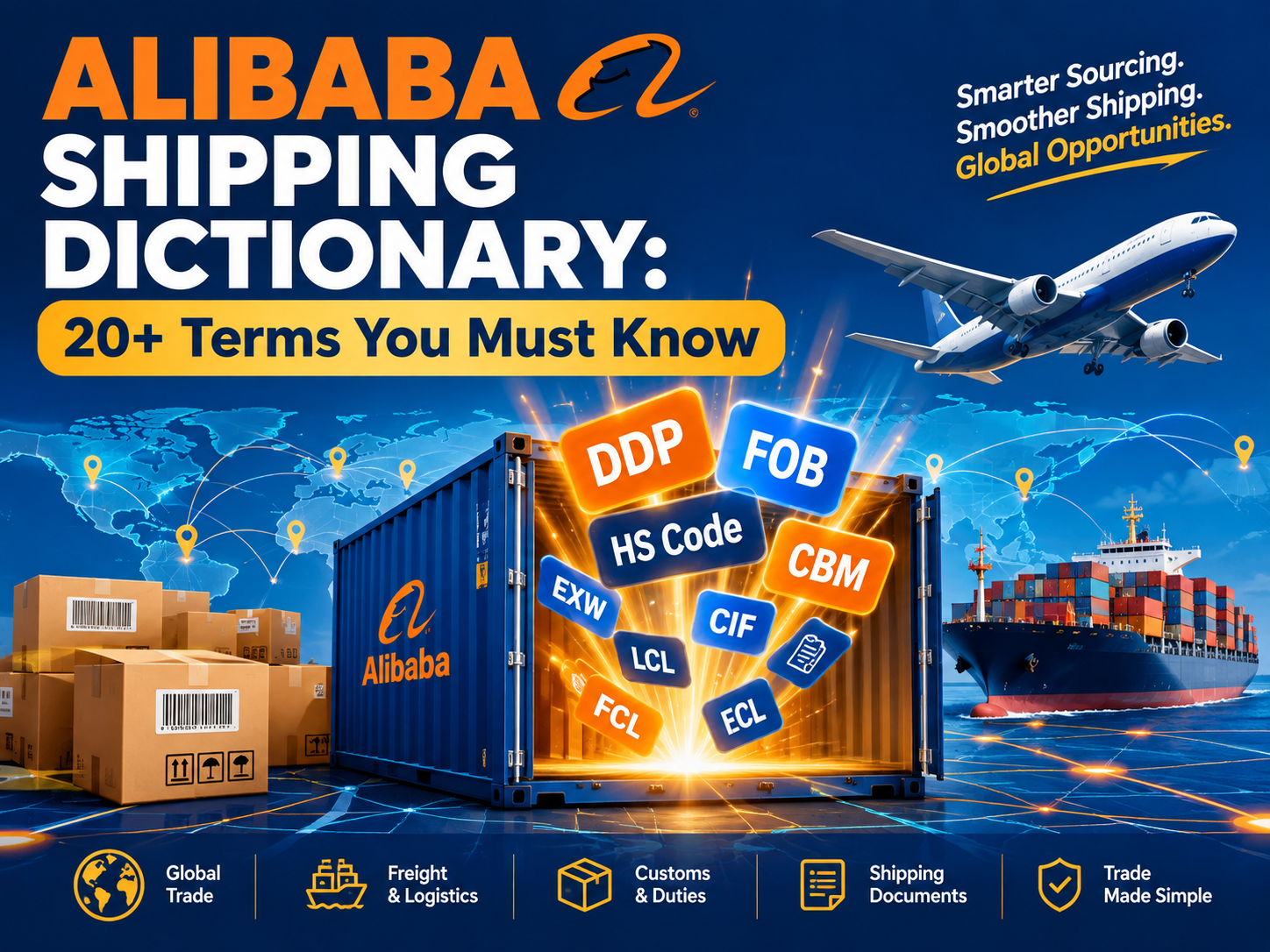
Scaling an e-commerce business using Alibaba is an incredibly lucrative strategy—until you hit the shipping phase.
For many marketers and sellers, navigating cross-border logistics feels like learning a completely new language. A single misunderstood acronym can mean the difference between a highly profitable product launch and your inventory getting permanently seized at the border.
If you want to protect your profit margins and ensure your goods arrive smoothly, you must master the vocabulary of international trade.
Bookmark this comprehensive Alibaba shipping dictionary to guide you through your next supplier negotiation.
🏗️ Phase 1: Sourcing & Pricing (Alibaba Incoterms)
When you ask an Alibaba supplier for a quote, they won’t just give you a price—they will give you a price attached to an Incoterm (International Commercial Term). This legal acronym determines exactly where the supplier’s responsibility ends and yours begins.
-
- EXW (Ex Works): The supplier only manufactures the goods. They leave the boxes on their factory floor, and you are 100% responsible for arranging pickup, export clearance, ocean freight, and domestic delivery. Best for experienced importers using their own freight forwarders.
- FOB (Free on Board): The supplier pays to get your goods to their local port and onto the shipping vessel. Once the goods are loaded, the financial risk and shipping costs transfer entirely to you. This is the most common quote format on Alibaba.
- DDP (Delivered Duty Paid): The most beginner-friendly option. The supplier handles the entire journey—sea/air freight, customs clearance, and import duties—and delivers the goods directly to your home or warehouse.
- CIF (Cost, Insurance, and Freight): The supplier pays for transit and basic insurance to your destination port. However, once the ship docks, you must pay hefty “destination port fees” and handle customs clearance yourself. Buyer beware: Suppliers often use low CIF quotes to hide high destination costs.
🚢 Phase 2: Freight & Transport Methods
How your goods physically travel across the globe affects both your timeline and your landed cost (the absolute total cost of an item by the time it reaches your hands).
-
- Express Courier: Door-to-door shipping via giants like DHL, FedEx, or UPS. It is the fastest option (3–5 days) and completely hands-off but highly expensive. Best for samples and small test batches.
- Air Freight: Faster than sea freight (5–10 days) and safer for fragile items, but priced by weight. Ideal for lightweight, high-margin products.
- Sea Freight (Ocean Freight): The most cost-effective method for bulky or heavy goods, taking anywhere from 20 to 45 days.
- LCL (Less than Container Load): If your order isn’t large enough to fill a massive metal shipping container, your freight forwarder will bundle your goods with other importers’ cargo inside a shared container.
- FCL (Full Container Load): You pay for and fill an entire 20-foot or 40-foot shipping container exclusively with your products.
- CBM (Cubic Meter): The primary unit of volume (1m × 1m × 1m) used to calculate sea freight costs. Alibaba suppliers will always ask for your total CBM to give a shipping estimate.
🛃 Phase 3: Customs & Compliance Documents
Customs clearance is where most first-time Alibaba buyers face delays, fines, or total product destruction. You need to know these documents inside and out.
-
- HS Code (Harmonized System Code): A universal 6-to-10 digit code used by customs officials to classify what your product is. The HS code directly dictates the tariff or duty rate you will pay. Always verify this code with your supplier before they ship.
- Commercial Invoice (CI): The official bill provided by your Alibaba supplier detailing the transactional value of the goods. Customs uses this document to calculate your import taxes.
- Packing List (PL): A detailed breakdown of every single carton in your shipment, outlining the weight, dimensions, and exact quantities of the items inside.
- Bill of Lading (BOL / BL): The legal contract issued by the sea carrier acknowledging they have received your goods. For air freight, this is known as an Air Waybill (AWB).
- Customs Broker: A licensed agent you hire to manage the complex paperwork of clearing your goods through local customs gates legally and smoothly.
📦 Phase 4: Arrival & Final-Mile Logistics
Once your inventory arrives in your country, the final leg of the journey begins.
-
- Drayage: The short-distance trucking required to move your container away from the hectic ocean port terminal and over to a local warehouse or rail yard.
- FBA Shipping (Fulfillment by Amazon): A specialized shipping method where your Alibaba cargo is pre-labeled and shipped directly to an Amazon fulfillment center rather than your house.
- Demurrage & Detention: Costly penalty fees charged by ports or shipping lines if you fail to pick up your container or return the empty equipment within the allowed “free time” window (usually 4–7 days).
- Alibaba Trade Assurance: Alibaba’s built-in escrow payment protection program. If your supplier fails to ship your order on time or sends goods that don’t match the agreed specifications, this program allows you to open a dispute to recover your money.
💡 Pro Tip for E-commerce Marketers & Sellers
Never rely blindly on a supplier’s shipping quote without calculating your true landed cost. Before sending a wire transfer, ask your supplier for the exact HS Code, total CBM, and total weight.
Take that data to a third-party freight forwarder to get a competing quote. By comparing options, you ensure you aren’t overpaying on Alibaba and can accurately predict your profit margins before the goods ever leave the factory floor.
Here is a quick visual comparison
Incoterms Quick Reference: Who Pays for What?
| Shipping Phase | EXW (Ex Works) | FOB (Free on Board) | CIF (Cost, Insurance & Freight) | DDP (Delivered Duty Paid) |
|---|---|---|---|---|
| Factory Pickup & Loading | 👤 Buyer | 🏭 Supplier | 🏭 Supplier | 🏭 Supplier |
| Export Customs (China) | 👤 Buyer | 🏭 Supplier | 🏭 Supplier | 🏭 Supplier |
| International Freight | 👤 Buyer | 👤 Buyer | 🏭 Supplier | 🏭 Supplier |
| Marine/Air Insurance | 👤 Buyer | 👤 Buyer | 🏭 Supplier | 🏭 Supplier |
| Destination Port Fees | 👤 Buyer | 👤 Buyer | 👤 Buyer (Hidden Cost!) | 🏭 Supplier |
| Import Customs & Duties | 👤 Buyer | 👤 Buyer | 👤 Buyer | 🏭 Supplier |
| Final Delivery (Your Door) | 👤 Buyer | 👤 Buyer | 👤 Buyer | 🏭 Supplier |
| Best Used For… | Experienced buyers with their own forwarders. | The industry standard for maximizing cost control. | Not recommended due to hidden port fees. | Beginners wanting a hands-off, hassle-free experience. |